

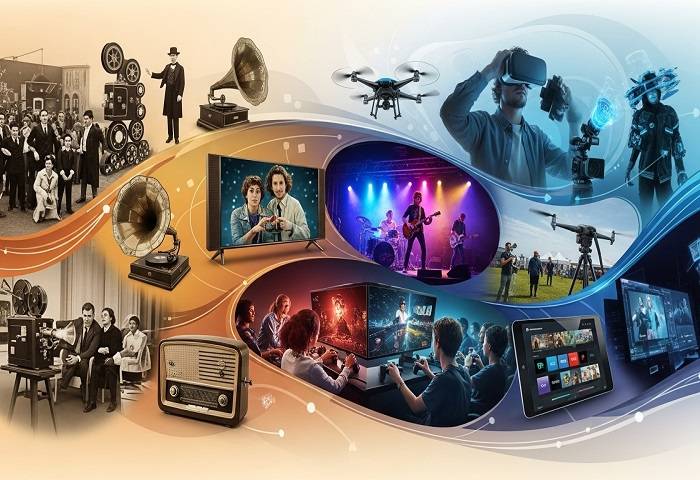
The landscape of global entertainment has undergone a seismic shift over the last decade. We have moved from a world defined by physical media and scheduled broadcasts to an era of instant gratification and personalized digital experiences. This transformation isn’t just about convenience; it’s about how technology has reshaped the human psychology of leisure. From streaming giants to the high-stakes world of online gaming, the digital frontier is expanding at an unprecedented rate.
The Rise of Interactive Digital Platforms
In the early days of the internet, users were passive consumers. You read a blog, watched a low-resolution video, or sent an email. Today, the “Web 3.0” philosophy has turned every user into a participant. This is most evident in the gaming industry, where the line between playing a game and social networking has blurred.
For many enthusiasts looking for the pulse of this industry, finding a reliable situs slot gacor has become a priority. The term represents more than just a place to play; it signifies the search for platforms that offer high engagement, transparency, and the potential for a rewarding experience. As developers integrate sophisticated algorithms and high-definition graphics, these platforms have evolved into complex ecosystems that rival traditional video games in terms of production value and user retention.
Why Engagement Rules the Market
What makes a digital platform successful in 2026? It boils down to engagement metrics. Whether it’s a social media app or a gaming portal, the goal is to provide value that keeps the user coming back.
- Gamification: Incorporating rewards, levels, and badges into non-gaming environments.
- Personalization: Using AI to suggest content based on previous behavior.
- Incentives: Offering specialized perks, such as a slot bonus, to enhance the initial user experience and provide a safety net for newcomers.
These incentives serve a dual purpose. For the provider, they act as a powerful marketing tool. For the user, they offer a way to explore the features of a platform without a significant upfront commitment. This “try-before-you-buy” or “boosted start” mentality has become a standard across the digital services sector, from software-as-a-service (SaaS) trials to digital hobbyist sites.
Technology Driving the Change
The backbone of this entertainment revolution is comprised of several key technological pillars. Without these, the seamless experiences we take for granted would be impossible.
1. Artificial Intelligence (AI)
AI is no longer a buzzword; it is the engine. In online entertainment, AI manages everything from customer support chatbots to the Random Number Generators (RNG) that ensure fairness in gaming. It analyzes patterns to prevent fraud and ensures that the “house” and the player interact in a secure environment.
2. 5G and Connectivity
The rollout of 5G has virtually eliminated latency. This is crucial for live-streaming and real-time multiplayer environments. When a player clicks a button, the response is instantaneous, creating an immersive “flow state” that was previously interrupted by buffering or lag.
3. Blockchain and Transparency
Blockchain technology is increasingly used to verify the integrity of digital transactions. In an era where “fake news” and digital scams are prevalent, the ability to prove that a platform is operating fairly is a massive competitive advantage.
The Psychology of Online Gaming
Why do millions of people flock to digital platforms daily? It isn’t just about the potential for winning; it’s about the psychological release. Modern life is stressful, and digital entertainment provides a “micro-escape.”
Psychologists note that the human brain is wired to respond to intermittent reinforcement. This is the same principle that makes checking your social media notifications so addictive. You don’t know when you’ll get a “like,” but the possibility keeps you engaged. Similarly, the thrill of a spinning reel or a strategic card game provides a dopamine hit that serves as a temporary distraction from the mundane.
However, with great engagement comes the need for responsibility. The most reputable platforms in 2026 are those that prioritize Responsible Gaming. Features like self-exclusion, deposit limits, and time-tracking are now standard, ensuring that the entertainment remains a healthy hobby rather than a compulsion.
Navigating the Sea of Options
With thousands of websites competing for attention, how does a consumer choose where to spend their time and money? Quality usually rises to the top through community feedback and expert reviews.
| Feature | Importance | Benefit |
| Security | Critical | Protects personal and financial data. |
| User Interface | High | Ensures a smooth, frustration-free experience. |
| Customer Support | High | Resolves issues quickly via live chat. |
| Variety | Medium | Keeps the experience fresh with new content. |
Platforms that check all these boxes tend to build long-term loyalty. They don’t just offer a service; they build a community where users feel valued and safe.
The Future: VR and Beyond
As we look toward the end of the decade, the next leap is clearly Virtual Reality (VR) and Augmented Reality (AR). Imagine walking through a virtual lobby, interacting with other players’ avatars, and sitting at a digital table that feels as real as mahogany.
We are moving away from 2D screens and toward spatial computing. This will turn online gaming into a fully social experience. You won’t just be playing a game; you’ll be attending an event. This shift will likely see a new wave of promotional structures, where bonuses and rewards are tied to social interactions and virtual explorations.
Conclusion
The world of digital entertainment is a brilliant tapestry of technology, psychology, and design. Whether you are a casual viewer of streaming content or someone searching for the best gaming platforms, the underlying trend is clear: The user is in control. The industry has moved toward a model of transparency and high-value incentives. By understanding the technology behind the screen and the psychology of why we play, consumers can make more informed choices and enjoy the vast digital landscape safely and rewardingly.